


 CN


Demand for one-item-one-code traceability, pharmaceutical UDI identification, product anti-counterfeiting, and brand personalized labels is rising rapidly. Digital coding, full-chain traceability, small batches, and high-frequency order changes are becoming clear development directions for the label industry. "One label, one code; one label, one content" is no longer a bonus feature but a must-have. At the same time, traceability regulation and VOC environmental protection policies are becoming increasingly stringent, pushing printing plants toward flexible, low-carbon digital printing routes.
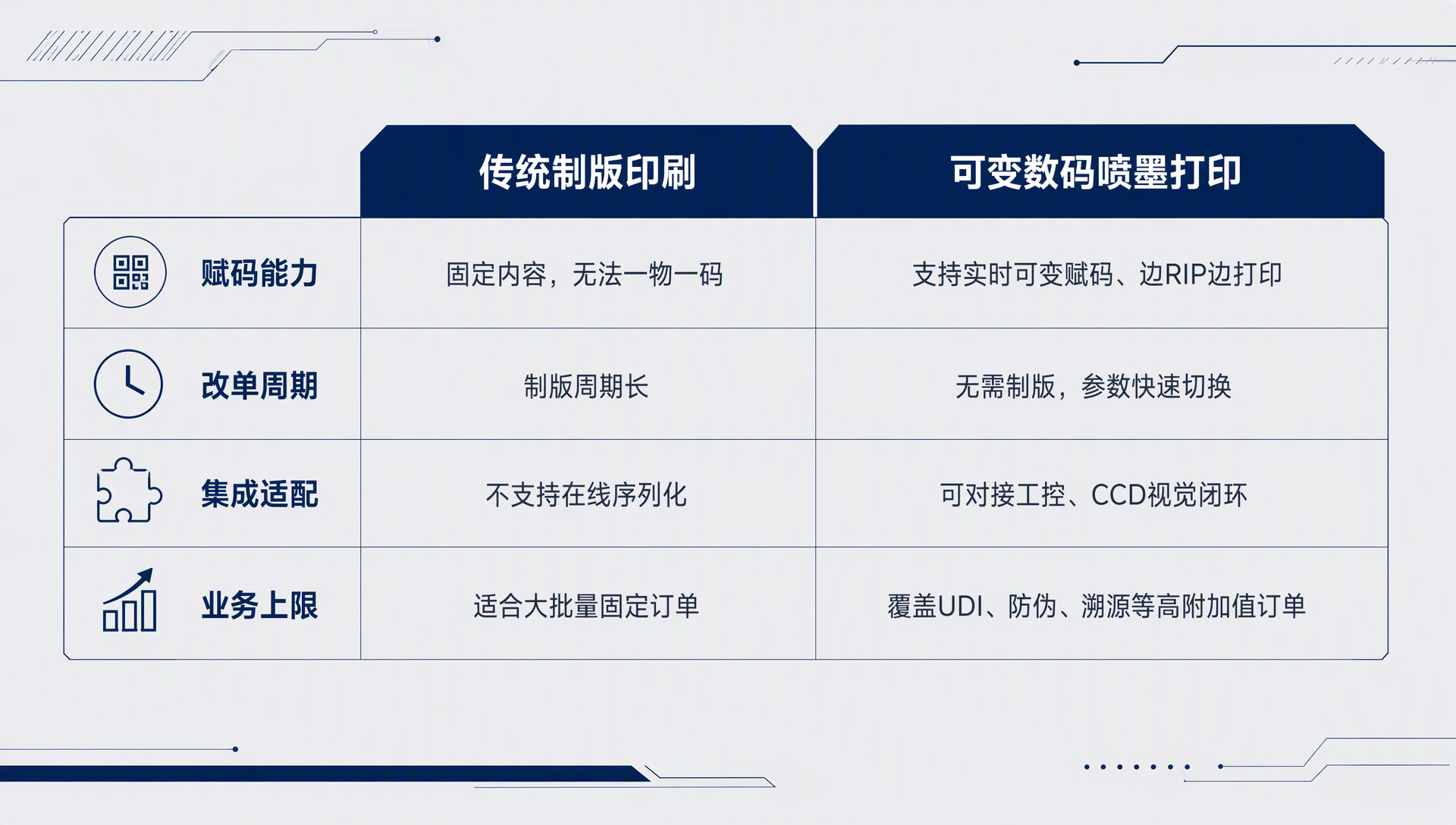
Traditional printing is better at large-batch production of fixed content and struggles to match the current order structure. Customers' selection priorities have also shifted: pure printing speed is no longer the top requirement. Stable data output, registration accuracy, and design-change flexibility have become the core indicators that matter most.
However, to implement variable coding production reliably, manufacturers still face many practical challenges:
- High cost of order changes: flexo and offset printing rely on plate making and lengthy machine setup. For temporary code changes, text changes, and small-batch orders, plate-making cycles are long and accepting such orders is not cost-effective.
- High variable data risk: in one-item-one-code and partial-variable scenarios, duplicate codes, missing codes, and data delivery stalls easily occur.
- Poor registration stability: multi-color overprinting, white ink underprinting, and easily stretched film substrates can cause pattern misalignment and unscannable QR codes, increasing waste losses.
- Limited color and substrate compatibility: for special self-adhesive materials such as PET, PP, and metal foil, color control is difficult, and batch-to-batch color differences are hard to control consistently.
- High inventory pressure: traditional printing can only start with large minimum order quantities, while brand owners iterate label versions quickly, making inventory buildup and finished-product scrapping highly likely.
In response to a series of pain points in variable data label production, including order-change costs, data risks, registration deviations, color control, and inventory pressure, Hosonsoft provides a variable data label inkjet printing solution integrating control boards + inkjet control + ink path + UV lamp + industrial control collaborative management. It is compatible with mainstream industrial printheads such as Ricoh and Epson, and supports OEM complete-machine development and digital transformation supporting for existing production lines. Its core capabilities are as follows:
1.Powerful variable data processing capability
Equipped with a self-developed RIP engine, it supports RIP-while-printing output without the need to pre-generate all variable files in advance, avoiding data flow interruptions and duplicate/missing code risks. It flexibly enables differentiated label printing and supports variable QR codes, barcodes, serial numbers, personalized text, and exclusive patterns. It supports dynamic changes to some identifiers under the same fixed pattern, making it suitable for traceability, anti-counterfeiting, and limited-edition custom labels without plate making.
2.High-precision visual closed-loop control ensures registration stability
Supports 1200×600 dpi / 1200×1200 dpi high-definition output; provides 0.1-pixel-level online fine adjustment, combined with CCD automatic correction, and relies on hardware chips to respond quickly to positioning signals, ensuring consistent pattern positions on every copy and stable precision for multi-color and white-ink overprinting.
3.Substrate compatibility + professional color management
Compatible with paper substrates such as coated paper, kraft paper, and thermal paper; film substrates such as PET, PP, PVC, and PE; and special materials such as metal foil and composite self-adhesive. Built-in ICC color management system strictly controls batch-to-batch color differences and meets high-standard visual requirements in food, pharmaceutical, and premium daily chemical applications.
4.Flexible printhead and color configurations adapt to different capacity requirements
Supports up to 1024H printhead arrays; mature configurations such as 12H, 15H, 21H, 27H, and 64H have already been implemented. Standard configuration is CMYK four colors + white ink, with optional custom spot colors such as purple, orange, and green on demand.
5.Green and environmentally friendly, aligned with low-carbon production requirements
Compatible with UV and low-VOC water-based environmentally friendly inks; the printing process produces no waste plates and little waste liquid. The on-demand printing mode avoids material waste caused by traditional large-batch printing and helps factories meet environmental compliance requirements.
6.Small-batch quick response, significantly shortening delivery cycles
Eliminates pre-processes such as plate making and color-unit adjustment; once the design file is confirmed, printing can start immediately. Small-batch orders can be delivered within hours, quickly responding to temporary order additions and urgent replenishment by brands and helping customers reduce label inventory pressure.
Multi-industry application scenarios
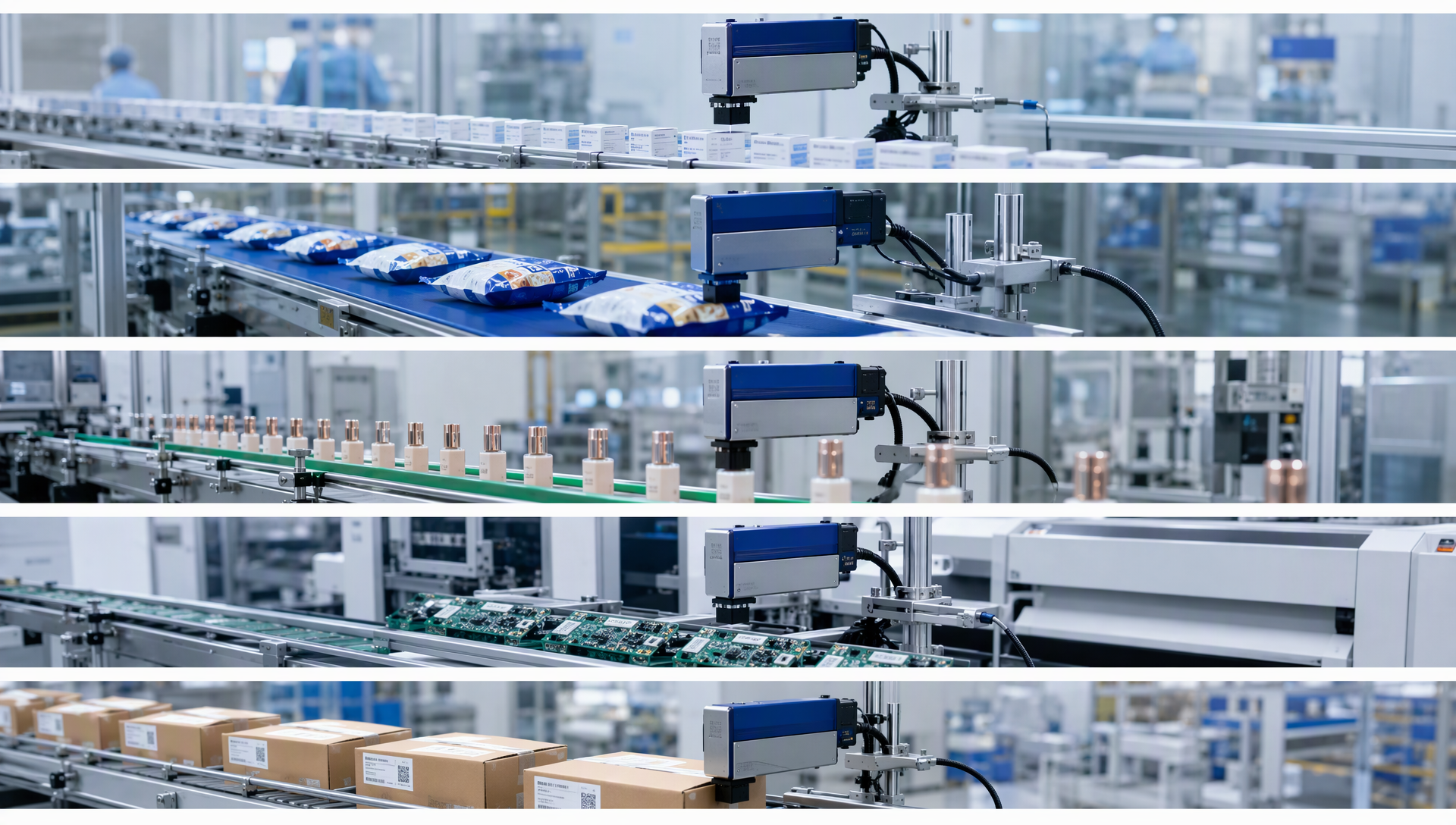
- Pharmaceutical industry: UDI unique identification labels and drug traceability labels, meeting regulatory compliance and traceability requirements.
- Food industry: batch information, production dates, and traceability QR codes for full-chain product tracking.
- Beauty and daily chemicals: limited-edition numbering, exclusive custom labels, and anti-counterfeiting codes to support brand marketing initiatives.
- Electronics industry: component serial numbers and anti-counterfeiting traceability labels, supporting production line control.
- E-commerce and retail: multi-SKU short orders and temporary promotional labels, quickly responding to marketing campaigns.
Small-batch production, traceability, and strong compliance have become the new normal in the label industry, and stable variable coding capability is becoming a core competitiveness for printing companies. Hosonsoft's variable data label inkjet printing solution, backed by integrated full-stack hardware and software capabilities, helps partners reliably take on new variable coding orders and capture the opportunities in the digital label track.
 Back


